
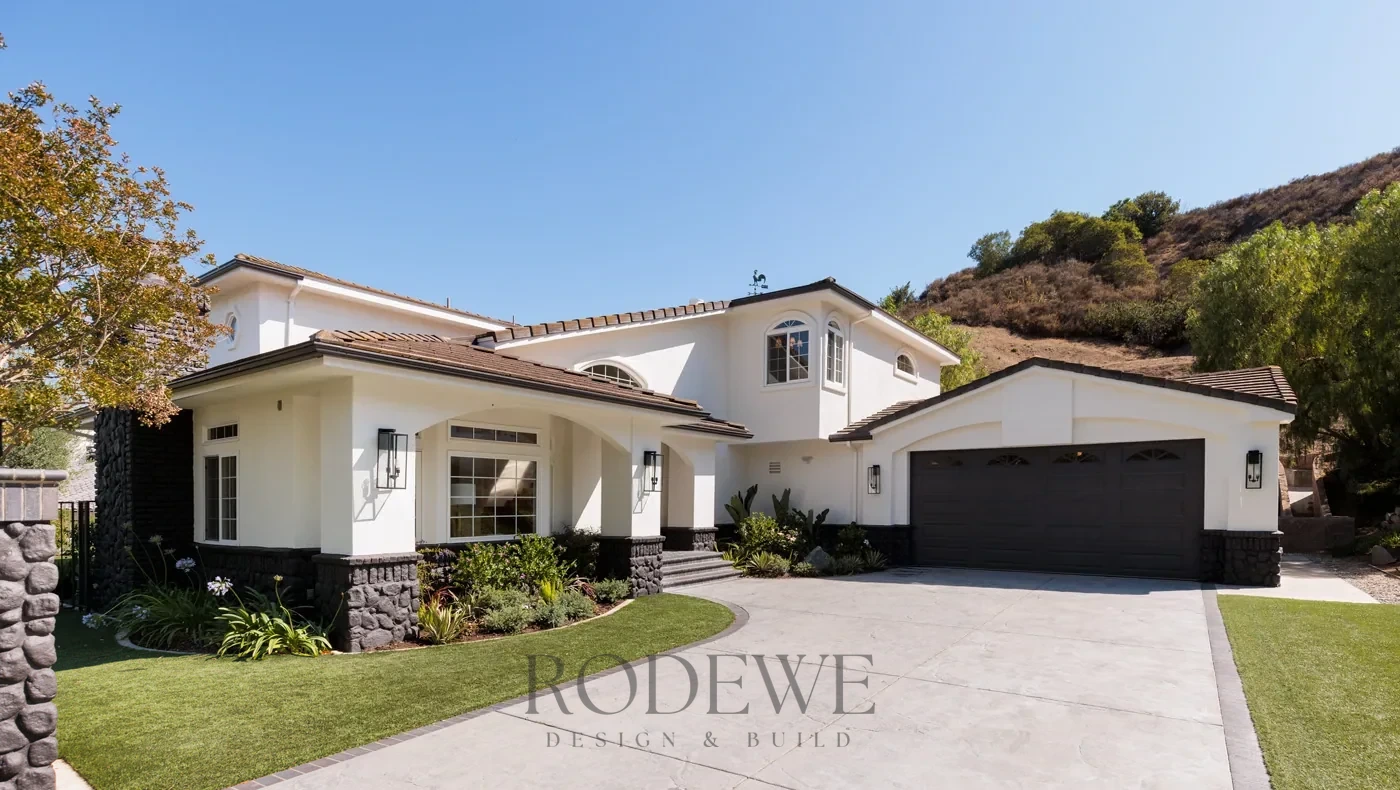
Real Estate Investment Renovation & Project Management in Irvine: A Construction Strategy for the Property
A property can absorb money through larger openings, custom cabinetry, new flooring, windows, appliances, lighting, stone, bathrooms, mechanical upgrades, landscaping, structural changes…
- CSLB licensedLicense No. 1146843
- Design + buildOne in-house team
- Permits handledPlans, submittals, inspections
- IrvineReply within one business day
A renovation budget is finite.
The possible ways to spend it are not.
A property can absorb money through larger openings, custom cabinetry, new flooring, windows, appliances, lighting, stone, bathrooms, mechanical upgrades, landscaping, structural changes, and dozens of smaller decisions that all seem reasonable on their own.
That makes investment renovation fundamentally different from simply asking, “What would look better here?”
The more useful question is:
Which improvements deserve permanent capital, and which do not?
For owners considering Real Estate Investment Renovation & Project Management in Irvine, that distinction matters from the first walkthrough through the final construction decision.
RODEWE approaches investment property renovation through design, construction management, and real estate development thinking. The objective is not to make every surface more expensive. It is to determine which improvements strengthen the property, which problems need to be corrected, which features should remain, and where additional spending would add complexity without meaningfully improving the project.
Start With a Renovation Thesis
Before creating a design concept, it helps to decide what kind of intervention the property actually needs.
RODEWE evaluates that through four actions:
Preserve. Reposition. Replace. Defer.
Those four words can make renovation decisions considerably clearer.
Preserve what already contributes to the property
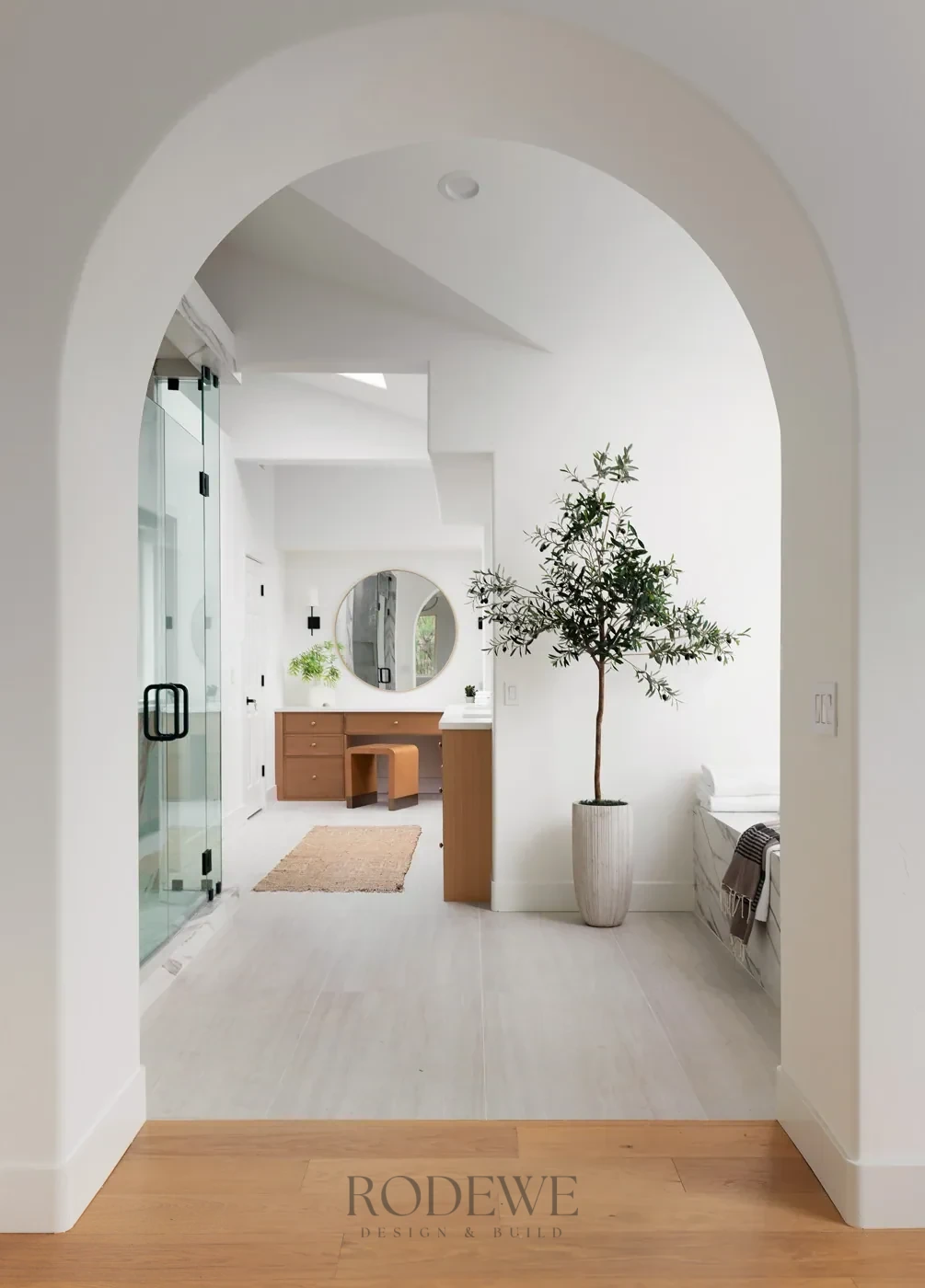
Existing elements should not disappear simply because construction is beginning.
A useful layout, quality wood flooring, mature architectural details, well proportioned windows, or existing cabinetry in good condition may have more value than starting over.
Preservation can also protect the budget for areas where intervention will make a greater difference.
The point is not to save everything.
It is to avoid demolition without a reason.
Reposition what is fundamentally useful but poorly arranged
Sometimes the components are not the problem.
Their relationships are.
A kitchen may contain enough square footage but have poor circulation.
A bathroom may have adequate dimensions but an awkward fixture arrangement.
A family room may be large enough but disconnected from the kitchen or outdoor space.
In those situations, changing relationships may create more value than adding finishes.
This is where space planning becomes an investment decision.
Replace what is limiting performance or design quality
Other elements have reached the end of their usefulness.
That may include building systems, damaged finishes, poorly performing windows, outdated lighting, failing waterproofing, worn flooring, impractical cabinetry, or materials inconsistent with the intended quality of the renovation.
Replacement decisions should consider both the immediate appearance and the expected use of the property.
Defer what does not need to happen now
This may be the most overlooked category.
A renovation does not become better simply because every possible improvement is included.
Sometimes a secondary bathroom can remain intact.
Sometimes landscaping can become a later phase.
Sometimes custom millwork in a low priority room can wait while the budget is directed toward permanent architectural work.
Knowing what not to build can be part of good project management.
Create a Decision Ledger Before a Finish Schedule
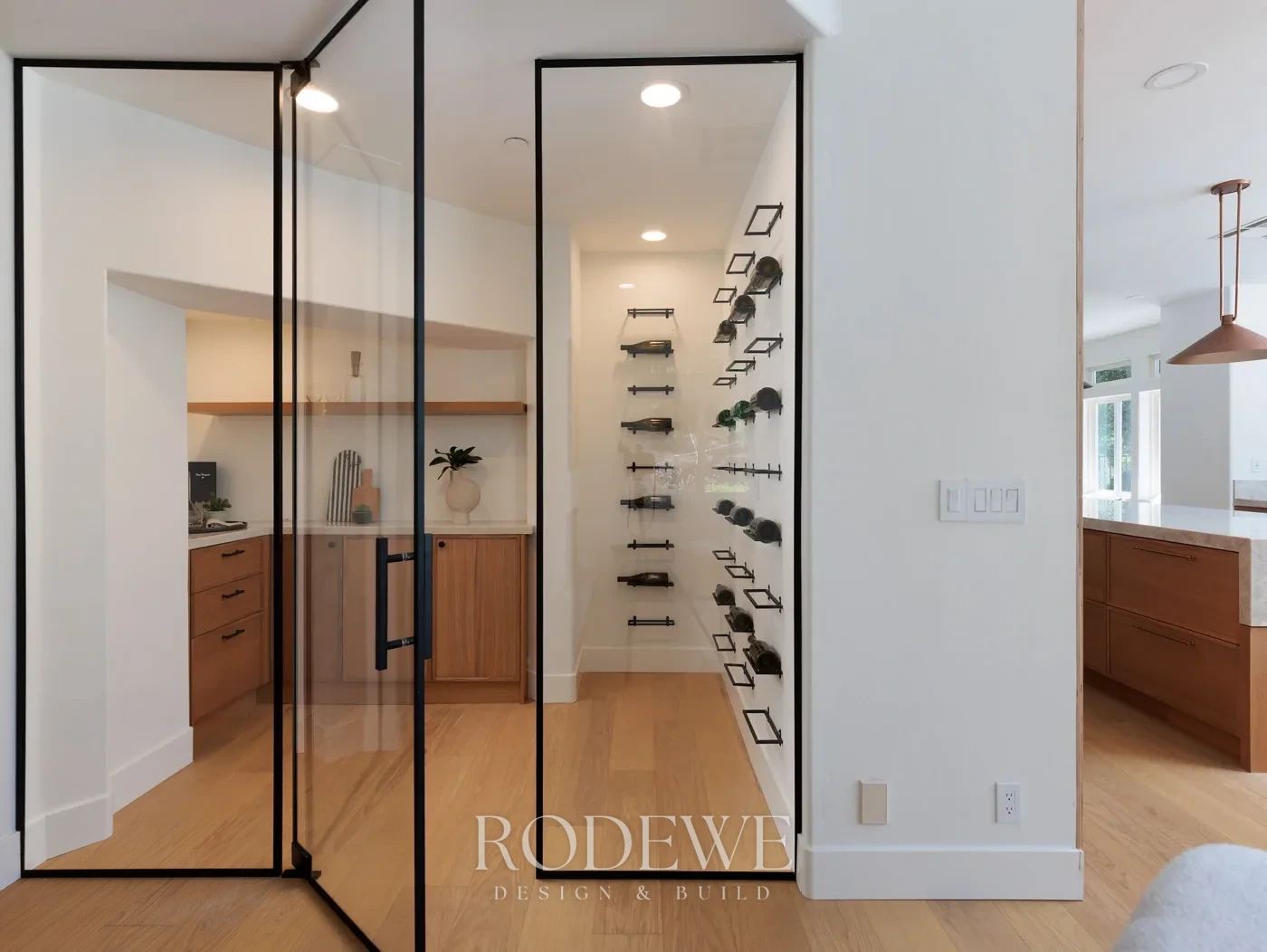
Investment projects become difficult when dozens of decisions exist without hierarchy.
One useful way to control that complexity is to create a decision ledger.
For each significant item, the team should understand what is being decided, why it matters, what other work depends on it, when the decision must become final, and what happens if it changes later.
Consider an appliance selection.
At first it appears to be a purchasing decision.
But appliance dimensions affect cabinetry.
Cabinetry affects electrical and plumbing locations.
Ventilation requirements may affect ceilings or exterior penetrations.
The appliance delivery date can affect installation sequencing.
One product choice can therefore connect design, procurement, construction, and schedule.
The same logic applies to plumbing fixtures, natural stone, flooring thickness, windows, doors, decorative lighting, and custom cabinetry.
A finish schedule tells you what was selected.
A decision ledger tells you why the selection needs to happen now.
That distinction becomes valuable when the renovation is being managed as an investment.
Irvine Adds Approval Time to the Construction Equation
An Irvine investment renovation may involve more than construction planning.
The City of Irvine states that the majority of its residential neighborhoods are managed by homeowners associations that can review alterations including architectural styles, exterior colors, and landscaping. Requirements vary by association and property.
City review is separate. Irvine's Building and Safety Division requires plans, permit approval, and inspections for applicable construction, additions, and remodeling work. Residential remodel and addition projects have their own plan submittal requirements.
For an investment project, these are not simply paperwork issues.
They affect timing.
A design that requires architectural review has an approval path.
A structural renovation has another.
Long lead materials have another.
Financing and carrying expenses continue while those processes occur.
This is one reason early project planning should include not only what will be built, but also what must happen before it can be built.
Spend First on Decisions That Are Difficult to Reverse
Not all renovation dollars have the same permanence.
Paint can change later.
Furniture can move.
Decorative accessories can be replaced without opening walls.
Structure cannot.
Plumbing locations are more difficult.
Electrical infrastructure matters.
Window openings affect architecture.
Waterproofing sits behind finished materials.
Cabinetry determines storage and often the proportions of entire rooms.
Flooring may connect thousands of square feet.
This suggests a practical investment principle:
Give the greatest attention to decisions that become expensive to reverse.
A sophisticated renovation does not need premium pricing in every category.
It needs discipline around permanent decisions.
A Kitchen Should Be Underwritten as a System
The kitchen is often one of the largest individual investments in a residential renovation.
That means it deserves more scrutiny than simply choosing attractive cabinetry and stone.
The first question is whether the location and layout are working.
Does the kitchen connect appropriately to dining?
Does circulation cut through the work area?
Is pantry storage located where it is useful?
Are appliances consuming too much of the visual composition?
Would moving one opening improve the entire first floor?
Only after those questions are resolved should the permanent material investment become specific.
Custom cabinetry can make sense when it solves architecture, storage, or proportion problems.
Natural stone can justify its cost when it establishes a clear material identity.
Lighting can significantly change how the cabinetry and stone are perceived.
But increasing the price of every component does not automatically improve the room.
The layout still has to earn the investment.
Bathrooms Should Be Evaluated by Use, Not Feature Count
Bathrooms can accumulate expensive features quickly.
Multiple stone types, elaborate niches, oversized showers, freestanding tubs, premium fixtures, decorative lighting, and custom cabinetry can all be appropriate.
They do not all need to exist in every bathroom.
For an investment property, RODEWE looks first at proportion, circulation, storage, lighting, durability, and installation quality.
One carefully selected stone can sometimes create a more refined room than several competing materials.
A well designed vanity may contribute more to daily function than an additional decorative feature.
Good mirror lighting may matter more than another recessed fixture.
The design should know which elements are leading and which are supporting.
Material Selection Has a Second Question: What Happens Later?
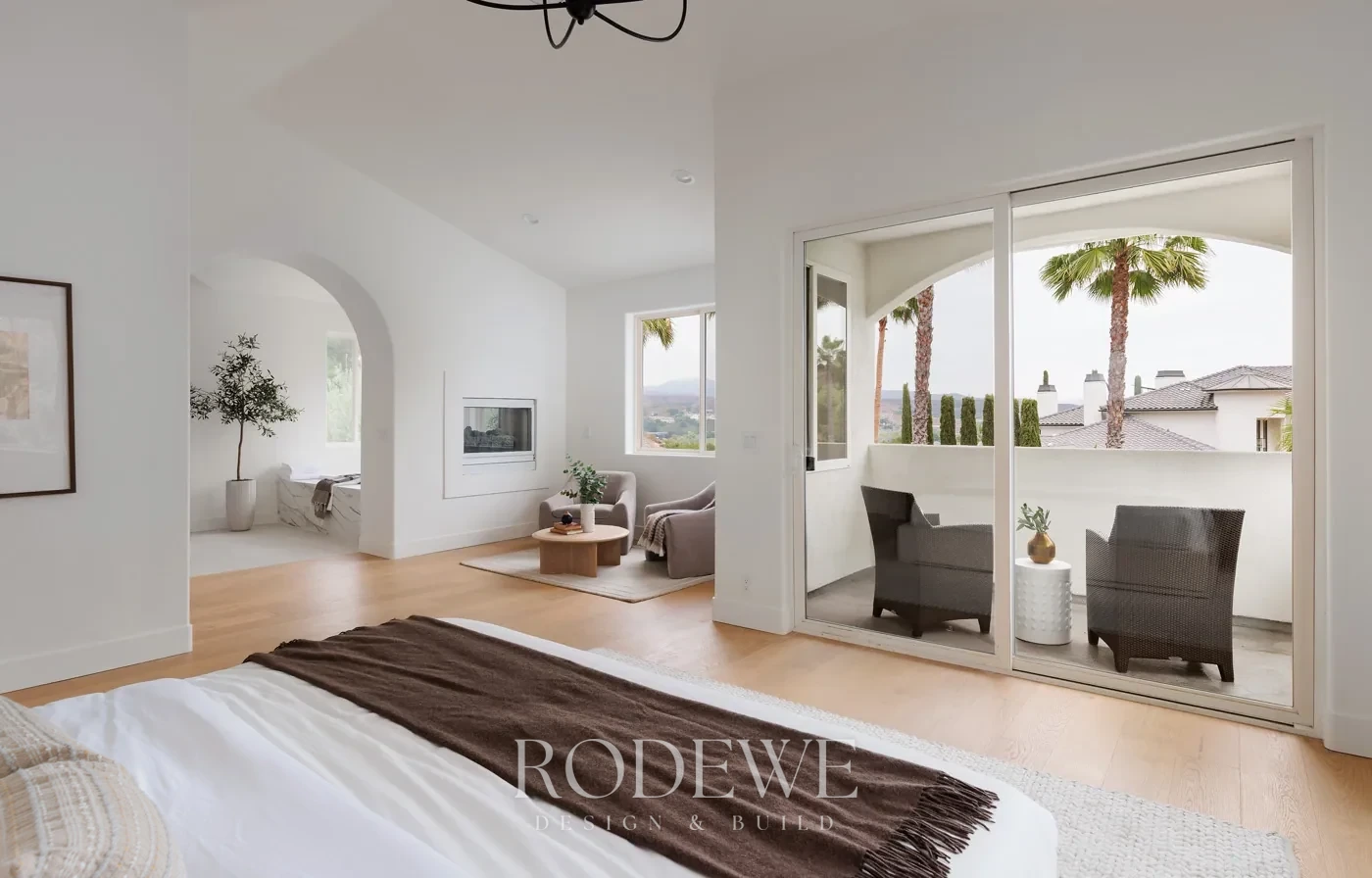
A beautiful product can still be an inconvenient investment.
Materials should also be evaluated for maintenance, replacement, availability, installation complexity, and lead time.
A highly specialized surface may make sense when it contributes something important to a distinctive property.
The same material may create unnecessary complexity in a project where durability and easy replacement matter more.
This does not mean investment properties should use generic finishes.
It means material selection should match the property strategy.
Flooring is a useful example.
Because flooring connects large portions of an interior, continuity often creates more impact than using several expensive materials.
The same is true for metals, cabinetry finishes, stone, and paint.
A restrained palette can make the property feel more intentional while simplifying procurement and future maintenance.
Furniture Planning Can Prevent Architectural Mistakes
Furniture is sometimes left until construction is nearly finished.
That can be too late.
A sofa determines circulation.
A dining table affects decorative lighting.
A television influences wall composition.
A bed affects outlets, switches, windows, and bedside lighting.
A desk can reveal whether a room actually functions as the flexible space described on the floor plan.
Even when RODEWE is not purchasing every piece of furniture, major furniture dimensions can be studied during design.
That helps prevent a common renovation problem: technically larger rooms that are surprisingly difficult to furnish.
Project Management Is Really Information Management
Construction projects generate an enormous amount of information.
Drawings.
Bids.
Selections.
Submittals.
Schedules.
Change requests.
Invoices.
Material orders.
Inspection requirements.
Site questions.
Owner decisions.
Project management should turn that information into something the owner can understand.
At any meaningful point in an investment renovation, the owner should have clarity on what has been approved, what has changed, what is pending, what needs a decision, and what may affect cost or schedule.
This is especially important when the owner is not visiting the property every day.
RODEWE views communication as part of project control rather than simply customer service.
An update is useful only if it arrives early enough for the owner to act on it.
Watch the Gap Between the Original Budget and the Current Project
Projects rarely become more expensive because of one single event.
Budget movement often happens incrementally.
One wall changes.
A better appliance is selected.
Additional lighting is added.
A bathroom scope expands.
Another room is included because flooring is already being replaced.
A finish upgrade appears small relative to the total budget.
Each decision can make sense individually.
The problem appears when nobody examines their cumulative effect.
Project management therefore needs to track both the original approved scope and the project as it currently exists.
The difference between those two versions is where scope creep becomes visible.
This does not mean changes should be avoided.
Some changes improve the project substantially.
They simply need to be evaluated as changes rather than absorbed quietly into the construction.
A Change Order Should Answer More Than “How Much?”
Price is only one part of a construction change.
A useful change review should also ask:
What work has already been completed?
Does the change affect drawings?
Does another trade need to return?
Will material orders change?
Does the inspection sequence change?
Does the schedule move?
Does the change create another decision somewhere else?
A relatively modest change can create disproportionate disruption if it occurs at the wrong stage.
This is one of the reasons major design decisions become more valuable when resolved before construction reaches them.
Procurement Has Its Own Critical Path
A material is not late only when the installer is waiting for it.
It can become late months earlier, when the selection was not approved in time to begin fabrication.
Custom cabinetry illustrates this clearly.
Before fabrication, the design has to be sufficiently resolved.
Appliance dimensions may need confirmation.
Site measurements may be required.
Finish selections must be approved.
Shop drawings may need review.
The construction schedule therefore depends not only on when cabinets are needed, but on when the information required to manufacture them becomes available.
Windows, doors, stone, specialty plumbing, custom metalwork, and certain lighting can create similar dependencies.
A well managed project tracks decision dates as seriously as installation dates.
Investment Renovation Is Different From Predicting Investment Return
RODEWE can help improve the design, construction planning, budget discipline, coordination, and execution of a property.
That should not be confused with guaranteeing a financial return.
Real estate performance also depends on acquisition cost, financing, interest expense, taxation, rental income, sales conditions, transaction costs, holding period, and broader market conditions.
Construction decisions influence one part of that equation.
The objective is therefore not to claim that a particular countertop, bathroom, or floor plan will create a specific return.
It is to avoid spending without a clear project reason.
When the Project Moves Beyond Renovation
An investment property does not always remain a renovation.
During feasibility and design, an owner may discover that a larger addition makes more sense.
An ADU may become relevant.
The existing structure may require more intervention than originally expected.
Or the property strategy may evolve into ground up new construction.
At that point, the owner's needs change.
The project becomes less about managing a renovation scope and more about coordinating an entire development process.
RODEWE's experience across real estate development, residential construction, construction management, and interior design allows the company to remain useful when the project becomes larger than a conventional remodel.
There are two ways that relationship can be structured.
RODEWE as the Owner's Representative for New Construction
An owner building a new residence may already have an architect, structural engineer, consultants, vendors, and a general contractor.
The owner may still need someone focused on the project from the owner's side.
When RODEWE is retained separately as the owner's representative and is not serving as the project's general contractor, the role can be structured around the owner's priorities.
That may include participating in project meetings, helping evaluate proposals, reviewing budgets and change requests, tracking important decisions, monitoring schedule information, following procurement, coordinating communication among the project participants, and helping the owner understand issues requiring action.
The exact responsibilities and authority should be defined in the agreement because owner's representation can mean different things on different projects.
The central idea is simple:
The architect represents the architectural scope.
The contractor manages construction under the construction agreement.
Engineers manage their disciplines.
The owner's representative helps the owner see the project across those boundaries.
RODEWE as a Construction Consultant
Full owner representation is not necessary for every project.
An experienced owner may already be comfortable managing the overall process but want another construction perspective before making certain decisions.
In that case, RODEWE can be engaged as a consultant for defined portions of a renovation or new construction project.
Consulting can be useful when reviewing an early construction budget, comparing contractor proposals, examining a proposed scope, evaluating material strategies, considering procurement decisions, reviewing a change request, or discussing a difficult construction issue.
The distinction matters.
An owner's representative may remain involved throughout the project.
A consultant can enter at specific decision points.
Both can provide construction knowledge without requiring RODEWE to be the general contractor on that particular project.
When RODEWE Is the Builder, the Role Should Be Different
Clear roles protect the owner.
If RODEWE is contracted as the general contractor, it should not simultaneously be described as an independent owner's representative reviewing its own construction work.
Instead, its design, construction management, budgeting, coordination, and reporting responsibilities should be established within the RODEWE construction agreement.
If another general contractor is building the project, RODEWE can separately serve on the owner's side as representative or consultant.
Defining that distinction before work begins creates clearer accountability for everyone involved.
Three Records Can Tell an Owner Whether the Project Is Under Control
Complex software is useful, but project control ultimately depends on maintaining three kinds of information.
The first is the decision record.
What decisions have been made, which are still open, and when must the remaining decisions become final?
The second is the cost record.
What was originally approved, what changes have been authorized, and what current commitments exist?
The third is the schedule record.
What is happening now, what is supposed to happen next, and what issue could prevent it?
When these three records agree with one another, an owner can understand the project quickly.
When they do not, problems can remain hidden until they become expensive.
What RODEWE Brings to an Investment Project
RODEWE is an Orange County design and construction company founded by a husband and wife team with complementary backgrounds in interior design and construction management.
RODEWE's published team information identifies Negin as Design Director with more than nine years of interior design experience and Daniel as a licensed California General Contractor with more than eight years of residential construction experience.
That combination matters in an investment renovation because design decisions and construction decisions rarely stay separate.
A cabinet decision can affect electrical work.
A stone decision can affect fabrication and installation sequencing.
A floor plan change can affect structure.
A new door can affect furniture and exterior design.
A material upgrade can affect procurement time.
RODEWE's role is to look across those relationships rather than evaluate each selection independently.
Renovation Capital Should Follow the Project Logic
A successful investment renovation does not need the largest scope.
It needs a clear reason for the scope it has.
Preserve what deserves to remain.
Reposition what can work better.
Replace what is holding the property back.
Defer what does not need investment today.
Then control the decisions, budget, procurement, and construction information closely enough that the original strategy survives the building process.
For property owners considering investment property renovation and project management in Irvine, RODEWE can assist with the design and construction of the renovation itself.
And when the property strategy develops into a larger renovation or ground up residential project, RODEWE can also be retained separately as the owner's representative or as a construction consultant when those roles better fit the owner's needs.
The conversation can begin before the finish selections.
It can begin with a simpler question:
Frequently asked questions
What is the difference between an investment renovation contractor and a project manager?
The contractor is responsible for performing the construction obligations established by the construction agreement. Project management focuses on organizing scope, schedule, decisions, procurement, communication, costs, and coordination across the project. Depending on the engagement, these responsibilities can exist within one company or be separated.
Can RODEWE renovate a property intended for resale or rental?
Yes. The design strategy should reflect the property's intended use. A resale renovation, long term rental, personal residence, and larger development project may justify different layouts, materials, levels of customization, and budget priorities.
Can RODEWE manage my project if I already have another general contractor?
RODEWE can be retained separately for owner representation or construction consulting when another general contractor is responsible for the construction. The agreement should clearly define RODEWE's responsibilities, authority, reporting, and interaction with the project's contractor and consultants.
What does an owner's representative do on a residential construction project?
An owner's representative works from the owner's side of the project and can help coordinate information across architecture, engineering, construction, procurement, schedule, budget, and owner decisions. The exact role depends on the contract and the needs of the owner.
Can RODEWE consult on a new construction project without managing the entire build?
Yes. Consulting can be structured around specific decisions or phases. An owner may request help reviewing proposals, budgets, material choices, construction sequencing, change requests, or other defined issues while continuing to manage the project directly.
Should an investment property use high end materials?
The finish level should respond to the property, intended use, design direction, durability requirements, and overall project strategy. Premium materials are most useful when they contribute meaningfully to architecture, function, or the quality of the completed property rather than being included simply because they are expensive.
Do Irvine investment renovation projects require HOA approval?
It depends on the property and the proposed work. The City notes that the majority of Irvine residential neighborhoods are governed by HOAs that review various exterior alterations. Applicable association requirements should be checked independently from City permit requirements.
When should the major materials be selected?
Permanent selections should be resolved according to construction dependencies. Appliances, plumbing fixtures, cabinetry, flooring, windows, doors, lighting, and stone may need decisions well before installation because other work depends on their dimensions, rough requirements, fabrication, or lead times.
More in Irvine
ADU Construction in Irvine · Bathroom Remodeling in Irvine · General Contractor in Irvine · High End General Contractor in Irvine · High End Remodeling Contractor in Irvine · Home Additions in Irvine · Interior Design in Irvine · Kitchen Remodeling in Irvine · Whole Home Remodeling in Irvine
Real Estate Investment Renovation in nearby cities
Real Estate Investment Renovation in Costa Mesa · Real Estate Investment Renovation in Coto de Caza · Real Estate Investment Renovation in Dana Point · Real Estate Investment Renovation in Laguna Beach · Real Estate Investment Renovation in Laguna Hills · Real Estate Investment Renovation in Laguna Niguel · Real Estate Investment Renovation in Newport Beach · Real Estate Investment Renovation in San Clemente
Countywide guides
Home Additions in Orange County · ADU Construction in Orange County · General Contractor in Orange County · Bathroom Remodeling in Orange County · Interior Design in Orange County · Kitchen Remodeling in Orange County · Whole Home Remodeling in Orange County · Construction Project Management in Orange County
Featured projects
Lusitano: Coto de Caza · Espalter: Mission Viejo · Sapphire: Balboa Island, Newport Beach
Guides
Design-build vs architect + general contractor · ADU vs JADU in Orange County · All articles
Explore
Our projects · Portfolio · How we work · All local guides · Construction management · Real estate investment · Request a consultation
Planning a project in Irvine?
Tell us about your home and goals. We will respond within one business day with next steps.
Request a free consultation
Tell us about your project. We reply within one business day.
- Phone: (949) 883-8438