

How Much Does a Full House Renovation Cost in Orange County?
Planning ranges for a full house renovation in Orange County, what drives the budget up or down, and what to confirm before comparing quotes.
- CSLB licensedLicense No. 1146843
- Design + buildOne in-house team
- Permits handledPlans, submittals, inspections
- Orange & LA CountyReply within one business day
A full house renovation cost in Orange County can start with a preliminary construction budget of approximately $175–$300 per square foot for a comprehensive remodel. An extensive renovation down to the studs can reach $300–$600 per square foot or more, while cosmetic updates generally fall below those levels.
For a 2,000-square-foot home, that translates to roughly $350,000–$600,000 for comprehensive renovation work, before separately budgeted expenses and contingency. These are planning ranges, not a project quote or a statistical market average. Published local estimates vary substantially because contractors include different scopes, specifications, and services.
Whether you own a home in Mission Viejo, Laguna Niguel, or Lake Forest, the most useful starting point is a clear description of the work:
- Which rooms will change?
- Will you keep the existing layout?
- Which systems need repair or replacement?
- What materials and finishes do you want?
- Does the project include exterior work?
- What expenses sit outside the construction contract?
Answering these questions turns a broad online price range into a budget you can actually use.
Full House Renovation Costs in Orange County at a Glance
Start by identifying the renovation category that most closely matches your plans.
| Renovation level | Preliminary budget per square foot | General scope |
|---|---|---|
| Cosmetic refresh | $60–$150 | Paint, flooring, lighting, hardware, and selective room updates; major systems and layout retained |
| Comprehensive renovation | $175–$300 | Kitchen and bathroom remodeling, finishes throughout, selected system upgrades, and limited layout changes |
| Full gut renovation | $300–$600+ | Extensive demolition, major system replacement, substantial layout changes, and new interior finishes |
| Bespoke luxury renovation | Individually estimated | Custom architecture, premium materials, specialized installations, and complex construction requirements |
The categories matter more than their names. A proposal described as a complete renovation might retain the roof, windows, electrical wiring, and much of the plumbing. Another might replace all of them.
Before using any price-per-square-foot estimate, ask what it includes. Confirm the treatment of:
- Design and engineering.
- Permits and inspection fees.
- Appliances and decorative fixtures.
- Contractor management and markup.
- Exterior improvements.
- Temporary housing and storage.
- Contingency for unexpected conditions.
Some proposals bundle these expenses; others separate them. Add each cost only once.
What Does a Full House Renovation Actually Include?
A full house renovation can range from coordinated finish updates to extensive reconstruction within an existing structure.
Cosmetic Renovation
A cosmetic renovation improves appearance while retaining most of the home’s underlying infrastructure.
It may include:
- Interior painting.
- Flooring replacement.
- Updated light fixtures and hardware.
- Cabinet refinishing or refacing.
- Selected countertop and bathroom fixture updates.
This approach can suit a home with a functional layout and systems that an assessment finds suitable to retain. It leaves less room to solve structural, circulation, or infrastructure problems.
Comprehensive Renovation
A comprehensive renovation addresses several rooms through one coordinated plan.
Typical priorities include:
- A remodeled kitchen.
- Updated bathrooms.
- Consistent flooring and finishes.
- Improved lighting and storage.
- Selected plumbing, electrical, or HVAC work.
- Defined changes to room connections or layout.
The important word is defined. Your scope should identify which systems and surfaces will change and which will remain.
Full Gut Renovation
A full gut renovation opens substantial portions of the home and rebuilds the interior more extensively.
Depending on the plans and existing conditions, it can involve:
- Removing interior finishes and wall coverings.
- Replacing major electrical and plumbing infrastructure.
- Reworking HVAC distribution.
- Modifying framing and structural supports.
- Upgrading insulation and selected windows.
- Reconstructing kitchens, bathrooms, and living spaces.
Rodewe’s full house renovation services in Orange County bring design, construction planning, and room-by-room decisions into one coordinated project.
Interior-Only vs. Interior and Exterior Renovation
An interior renovation does not automatically include:
- Roof replacement.
- Exterior wall repairs.
- Window and exterior door replacement.
- Drainage improvements.
- Patios, landscaping, or outdoor structures.
Include these items explicitly when they form part of your plans. Otherwise, two apparently similar estimates may describe very different projects.
Whole House Renovation Cost by Home Size
Square footage helps establish a starting range once you have selected a scope.
The following figures multiply the planning rates above by the stated home sizes. They are calculated examples, not completed-project prices. They assume renovation work across the stated area, with separately excluded expenses added afterward.
| Home size | Cosmetic refresh | Comprehensive renovation | Full gut renovation |
|---|---|---|---|
| 1,500 sq. ft. | $90,000–$225,000 | $262,500–$450,000 | $450,000–$900,000+ |
| 2,000 sq. ft. | $120,000–$300,000 | $350,000–$600,000 | $600,000–$1,200,000+ |
| 3,000 sq. ft. | $180,000–$450,000 | $525,000–$900,000 | $900,000–$1,800,000+ |
Why Square Footage Alone Can Mislead
Two 2,000-square-foot houses can require different budgets because one has:
- More bathrooms.
- A larger kitchen.
- Significant structural changes.
- More custom cabinetry.
- Difficult site access.
- Infrastructure that needs extensive replacement.
Use the area affected by the work. Remodeling 1,200 square feet within a 2,000-square-foot house is different from renovating the entire property.
Bedrooms and living rooms also do not carry the same cost profile as kitchens and bathrooms. A house with more plumbing-intensive spaces can cost more to renovate even when its total floor area is smaller.
Where Does the Money Go? A Whole-House Renovation Cost Breakdown
A useful estimate connects each expense to a specific part of the project.
| Cost category | What to clarify |
|---|---|
| Design and documentation | Layout planning, finish selections, architectural drawings, and engineering |
| Demolition and protection | What comes out, what stays, dust control, hauling, and disposal |
| Structural work | Wall changes, beams, posts, framing, and foundation modifications |
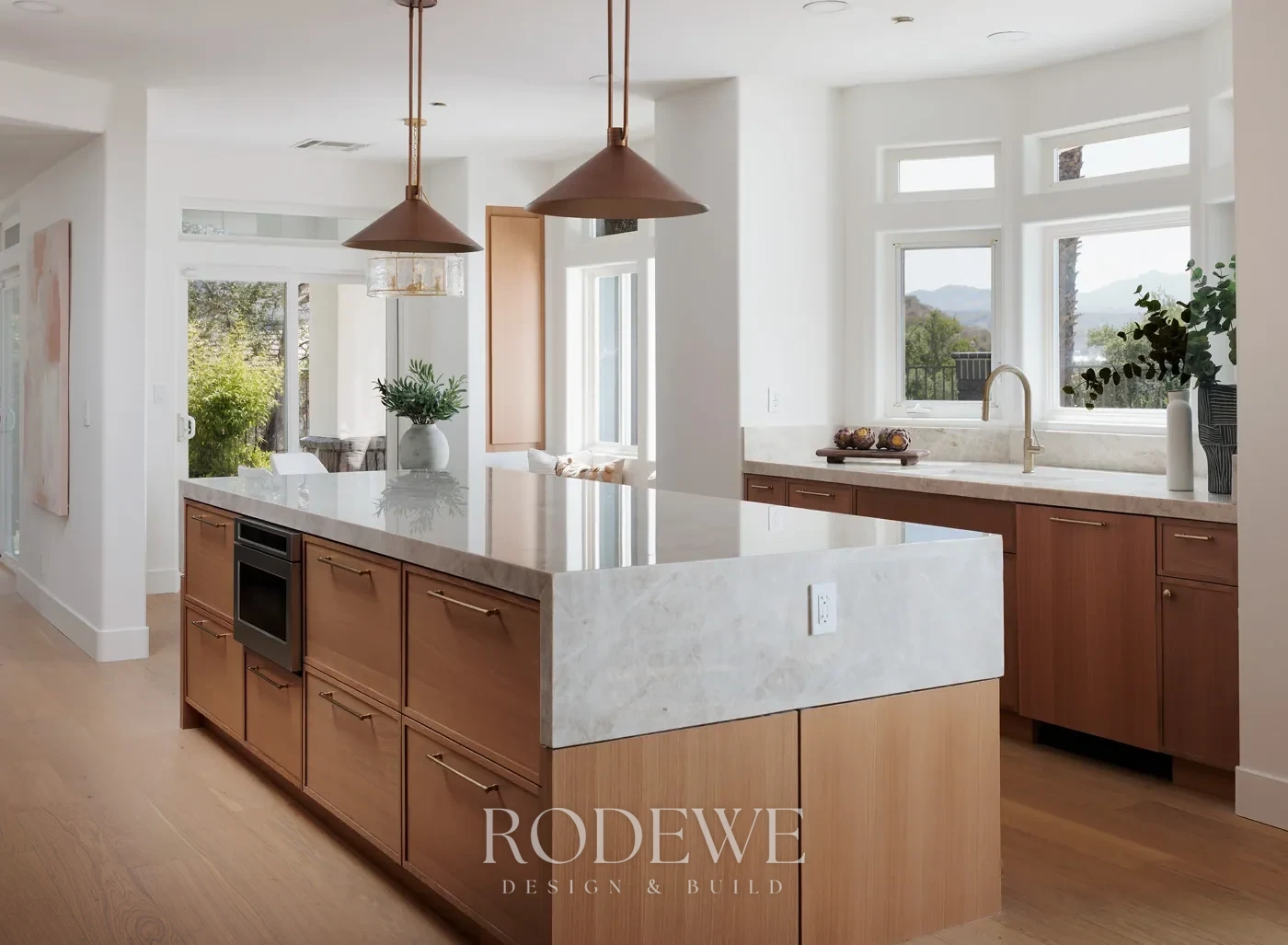
| Kitchen | Cabinetry, counters, appliances, utilities, lighting, and installation |
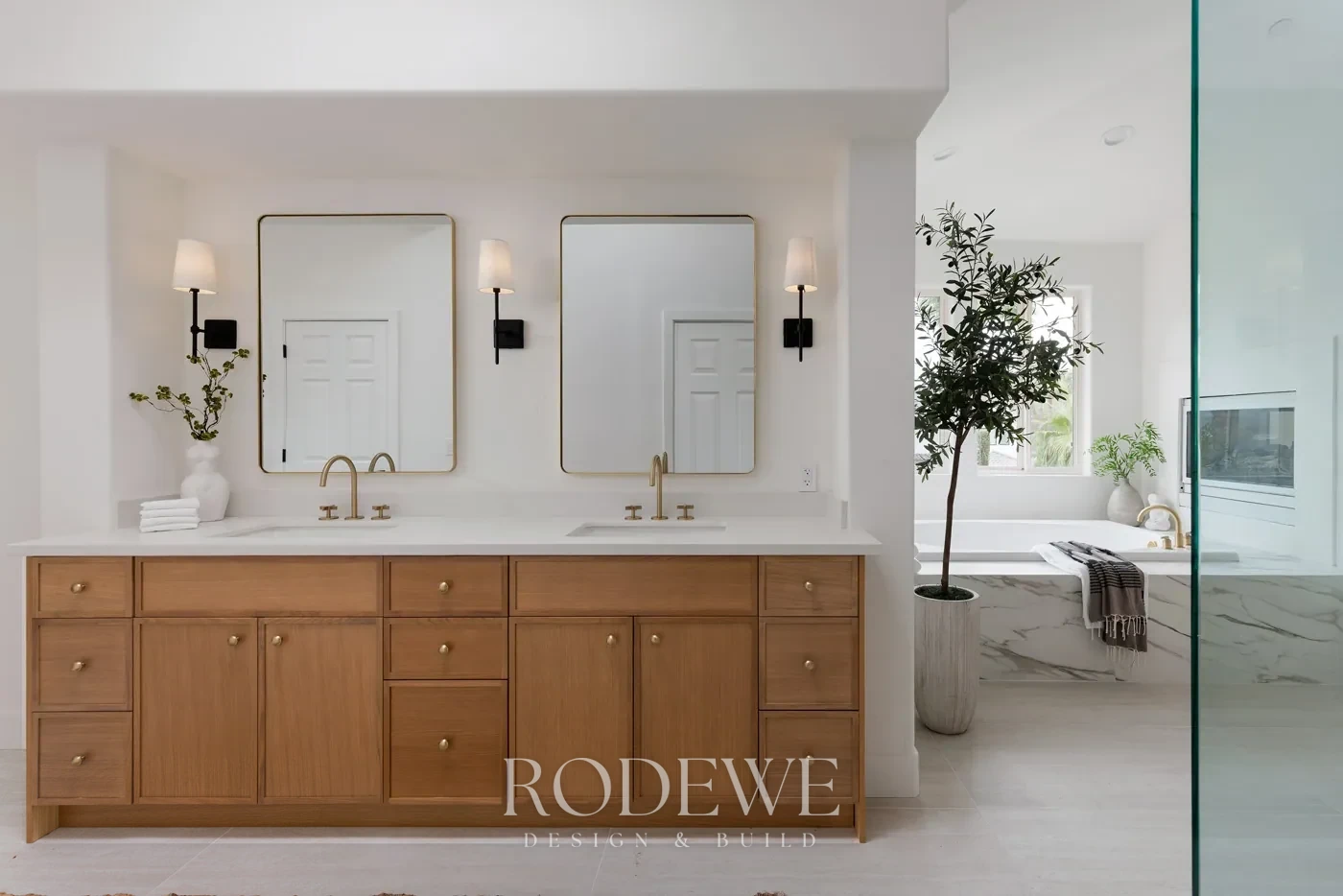
| Bathrooms | Waterproofing, tile, fixtures, glass, ventilation, and plumbing |
| Building systems | Electrical, plumbing, heating, cooling, and associated repairs |
| Interior finishes | Flooring, drywall, paint, doors, trim, and built-ins |
| Exterior work | Roofing, windows, doors, exterior finishes, and drainage where included |
| Project delivery | Supervision, trade coordination, site operations, and contractor overhead |
Kitchen Remodeling
The kitchen can influence both the budget and the construction sequence.
Key cost decisions include:
- Stock, semi-custom, or custom cabinetry.
- Cabinet quantity and storage accessories.
- Countertop material, fabrication, and edge details.
- Appliance specifications.
- Lighting and ventilation.
- Whether sinks, cooking equipment, or walls move.
Published local guides place many standalone kitchen remodels around $45,000–$100,000 or more, with substantial variation by scope. Treat this as a separate room-level reference; a kitchen already included in your whole-house contract should not be added again.
When planning kitchen remodeling in Orange County, decide early whether the existing footprint can support the storage, circulation, and gathering space you need.
Bathroom Remodeling
Bathroom costs depend on more than the room’s size.
Review:
- The number of bathrooms.
- Shower and tub configurations.
- Waterproofing requirements.
- Tile coverage and installation complexity.
- Vanity and storage specifications.
- Fixture locations.
- Ventilation and lighting.
- Accessibility features.
A broad local planning reference for a standalone bathroom remodel is $25,000–$60,000. Custom primary bathrooms can fall outside that range.
Planning bathroom remodeling in Orange County alongside the rest of the house helps coordinate materials, plumbing decisions, and construction timing.
Electrical, Plumbing, and HVAC
Ask the team to distinguish between:
- Repairs.
- Limited upgrades.
- Partial replacement.
- Whole-house replacement.
An electrical panel upgrade does not necessarily include a complete rewire. Replacing visible plumbing fixtures does not mean replacing concealed supply and drain lines.
The estimate should describe the actual work.
Structural Changes
Opening a floor plan can involve more than removing drywall.
The project may need:
- Structural assessment and engineering.
- Temporary support.
- New beams or posts.
- Changes to foundations or connections.
- Relocation of utilities.
- Repairs to adjacent ceilings and floors.
Determine the structural requirements before treating an open-concept layout as a simple finish upgrade.
Materials, Installation, and Contractor Management
Compare installed costs, including preparation, delivery, labor, and finishing.
For example, flooring expenses may include:
- Removing existing flooring.
- Preparing or leveling the substrate.
- Moisture-related preparation.
- Installing the selected material.
- Replacing baseboards and transitions.
Also establish whether supervision, overhead, and profit already appear in the contract price. They may sit within individual line items or a separate fee.
What Affects Renovation Costs in Mission Viejo, Laguna Niguel, and Lake Forest?
Your address helps identify the relevant jurisdiction and site conditions. It does not, by itself, establish a reliable renovation price.
Full House Renovation Costs in Mission Viejo
For home remodeling in Mission Viejo, begin with the property’s actual condition and renovation history.
Questions worth resolving include:
- Have previous owners changed the original layout?
- Which alterations have documentation?
- Can existing electrical and plumbing systems support the proposed work?
- Will exterior changes require HOA review?
- How will materials and debris move through the site?
A cosmetic update and a structural remodel in the same neighborhood can require very different budgets.
Full House Renovation Costs in Laguna Niguel
For home remodeling in Laguna Niguel, evaluate:
- Access and available staging space.
- Interior and exterior project boundaries.
- Site-specific drainage or structural concerns.
- Finish specifications.
- Applicable city and HOA reviews.
Check requirements for the particular property. Proximity to the coast should not become an automatic price surcharge or an assumption about permit requirements.
Full House Renovation Costs in Lake Forest
For home remodeling in Lake Forest, establish:
- The property type and affected floor area.
- Restrictions involving shared buildings or common elements, where applicable.
- Existing system conditions.
- Contractor access and working arrangements.
- Whether phased construction would suit the household.
Compare homes by scope and conditions before comparing them by city name.
Permits, Engineering, and HOA Approvals
Review approvals while developing the scope, before committing to a construction start date.
Which Work May Require Permits?
Depending on local requirements, permit review may apply to:
- Structural modifications.
- Electrical alterations.
- Plumbing changes.
- Mechanical equipment work.
- Window or exterior opening changes.
- Additions and conversions.
Requirements can distinguish between limited finish work and more extensive remodeling. Laguna Niguel’s official kitchen remodeling guidance, for example, identifies certain countertop replacement and cabinet refacing work separately from kitchen alterations requiring permits.
HOA Approval Is a Separate Step
An HOA review and a city permit serve different purposes. Establish:
- Whether each applies.
- Who prepares the required documents.
- Who submits them.
- Which approvals must come before construction.
- How revisions could affect the schedule.
Permit Fees Need a Current Check
Avoid carrying an old permit allowance into a new project without checking it. The City of Laguna Niguel Building and Safety Division publishes fee adjustments, including changes effective in July 2026.
Ask for a project-specific allowance and clarification about plan review, permits, inspections, and any additional applicable charges.
Hidden Costs That Can Change Your Renovation Budget
A thorough scope reduces uncertainty, but opening existing construction can reveal conditions that earlier inspections could not fully expose.
Concealed Conditions
Potential discoveries include:
- Water damage behind finishes.
- Deteriorated framing.
- Plumbing defects.
- Earlier alterations requiring correction.
- Unsuitable substrates beneath flooring or tile.
Ask how the contractor documents a discovery, prices the response, and obtains authorization.
Testing and Remediation
The age of the property, its materials, and the planned disturbance can affect testing requirements for hazardous materials.
Do not assume every older house contains the same hazards. Establish an appropriate assessment and budget for professional handling where necessary.
Temporary Housing and Daily Expenses
Your household budget may need to cover:
- Moving out and returning.
- Furniture storage.
- Temporary accommodation.
- Additional transportation.
- Changes to food and laundry arrangements.
- Pet accommodation.
Compare these costs with the practical effects of staying during construction.
Allowances and Owner Purchases
An allowance is a budget provision for a selection that is not yet fully specified.
For each allowance, ask:
- Does it include installation?
- Does it include delivery and applicable taxes?
- What quantity does it cover?
- What happens if the final selection costs more or less?
- Who handles damage, returns, and warranty coordination?
How Much Contingency Should You Budget?
A 15–20% contingency on the construction budget can serve as an initial planning allowance, with the appropriate amount adjusted to the project’s uncertainty. Extensive unknown conditions may justify a different reserve.
For clarity, track these separately:
- Unexpected existing conditions.
- Changes you request.
- Differences between allowances and final selections.
A Sample Budget for a 2,000-Square-Foot Home Renovation
Consider a hypothetical home with:
- One kitchen and two bathrooms.
- New flooring and paint throughout.
- Limited layout changes.
- Defined electrical, plumbing, and HVAC improvements.
- No added square footage.
- No major foundation reconstruction or extensive exterior work.
The following example illustrates budget structure. It is not a Rodewe quote, a completed project, or a market average.
| Budget item | Illustrative amount |
|---|---|
| Construction contract | $420,000 |
| Design and engineering outside the construction contract | $28,000 |
| Permit and review allowance outside the contract | $7,000 |
| Owner-purchased appliances excluded from the contract | $20,000 |
| Construction contingency: 15% of $420,000 | $63,000 |
| Moving, storage, and temporary housing allowance | $24,000 |
| Total planning budget | $562,000 |
In this example:
- The construction figure equals $210 per square foot.
- The assumed contract includes specified installed finishes and fixtures.
- The appliance allowance covers purchases excluded from that contract.
- The contingency is a reserve; actual spending may be lower or higher.
- Exterior improvements and financing expenses are excluded.
This distinction matters: a $420,000 construction contract and a $562,000 overall budget describe different financial commitments.
What Can Different Renovation Budgets Cover?
A budget becomes useful when you connect it to priorities.
What Can a $100,000 Renovation Budget Cover?
Depending on the property and specifications, consider:
- A focused kitchen or bathroom project.
- Selected flooring, paint, and lighting updates.
- A smaller cosmetic scope.
- The first stage of a coordinated renovation plan.
For a typical 2,000-square-foot house, this budget sits below the comprehensive renovation range used in this guide.
What Changes With a $250,000 Budget?
You may need to choose between:
- Updating more rooms with restrained specifications.
- Completing fewer rooms at a higher finish level.
- Retaining functional systems and layouts.
- Phasing work that can wait.
A smaller home with limited infrastructure work presents different possibilities from a larger property requiring extensive repairs.
When Does a Renovation Reach $500,000 or More?
A larger budget can support a broader scope, but it still needs boundaries.
Major cost drivers include:
- Multiple bathrooms.
- Extensive custom cabinetry.
- Structural modifications.
- Substantial system replacement.
- Window, roof, or exterior work.
- Premium materials and detailed installation.
Use the budget to test a defined plan rather than assuming it will cover every desired change.
How Long Does a Full House Renovation Take?
Build the schedule around separate stages:
- Assessment and scope: establish goals, existing conditions, and priorities.
- Design and documentation: develop layouts, specifications, and necessary technical details.
- Approvals and procurement: coordinate reviews and order materials.
- Construction: sequence demolition, structure, systems, inspections, and finishes.
- Completion: resolve remaining items and complete the handoff.
For broad initial planning, published local guides suggest approximately:
| Project level | Overall planning timeframe |
|---|---|
| Cosmetic renovation | Around 3–4 months |
| Mid-level whole-home renovation | Around 6–12 months |
| Extensive full gut renovation | Around 12–18 months |
These are general reference periods, not city processing commitments or Rodewe delivery promises. Project size, approvals, procurement, and existing conditions can change them.
Can You Live at Home During the Work?
Discuss whether the project can maintain:
- Safe access.
- A usable bathroom.
- Necessary utilities.
- Suitable separation from construction.
- Practical cooking and sleeping arrangements.
Remaining at home can reduce relocation expenses, but it may require additional protection, repeated setup, and a different work sequence. Compare the complete options.
Is It Cheaper to Renovate, Add Space, Build an ADU, or Rebuild?
Start with the problem you need to solve.
| Project approach | Main purpose | Budget considerations |
|---|---|---|
| Renovation | Improve existing space | Existing conditions, layout, systems, and finishes |
| Home addition | Increase the main home’s floor area | Foundations, structure, roof connections, utilities, and approvals |
| ADU | Create an additional dwelling | Site work, independent living facilities, utilities, and applicable requirements |
| Rebuild | Replace the existing building | Demolition, site preparation, new construction, and the full approval process |
The cost of building an addition in Orange County requires its own estimate. An additional bedroom and a kitchen extension can involve different work even at similar sizes.
Likewise, the cost of building an ADU in Orange County should not come from multiplying its area by an interior renovation rate.
If the proposed renovation would replace much of the structure and infrastructure, compare it with rebuilding through a feasibility study before finalizing the design.
How to Reduce Renovation Costs Without Creating Expensive Rework
The strongest savings come from decisions made before construction.
- Retain a layout that works. Move plumbing and walls when the functional improvement justifies it.
- Set priorities early. Separate essential repairs, important improvements, and optional features.
- Choose materials before their installation deadlines. Confirm specifications, quantities, and availability.
- Compare installed prices. Include preparation, fabrication, delivery, and labor.
- Coordinate repeated finishes. Review opportunities to simplify materials and detailing.
- Plan phases together. Avoid completing work that a later phase must remove.
- Protect concealed work. Structural connections, waterproofing, and necessary system improvements deserve careful attention.
If resale forms part of your plan, assess the proposed investment against relevant comparable properties. Renovation spending does not guarantee an equivalent increase in sale price.
How to Compare Whole-House Renovation Quotes
Give each contractor the same project information, then compare the details behind the total.
Check the Scope
Confirm:
- Rooms and floor areas.
- Demolition boundaries.
- Structural changes.
- System repairs and replacement.
- Finish specifications.
- Exterior work.
- Cleanup and disposal.
Check the Commercial Terms
Review:
- Included services and exclusions.
- Material allowances.
- Owner-supplied items.
- Payment milestones.
- Schedule assumptions.
- Procedures for changes and concealed conditions.
- Warranty terms.
The California Contractors State License Board emphasizes detailed written descriptions, payment schedules, and written change orders in its home improvement contract guidance. Use these principles when reviewing the proposed agreement.
Check Relevant Experience
Ask to see:
- Projects with comparable scope.
- Examples of similar construction challenges.
- References where available.
- Current licensing and insurance information.
- The proposed communication and supervision arrangements.
A lower quote may offer good value, but first establish whether it covers the same work.
Full House Renovation Cost FAQs
How much does it cost to completely renovate a house in Orange County?
For initial planning, this guide uses approximately $175–$300 per square foot for comprehensive renovation work and $300–$600 or more for extensive gut renovation. The final estimate depends on the property, specifications, and included services.
How much does it cost to renovate a 2,000-square-foot house?
Applying those planning rates produces approximately $350,000–$600,000 for a comprehensive renovation or $600,000–$1,200,000 or more for a full gut. Add separately excluded expenses and an appropriate contingency.
Is $100,000 enough for a full house renovation?
It may support a limited cosmetic scope or selected room renovations. It generally does not match the comprehensive 2,000-square-foot scope described here. Define the priorities and affected area before deciding what the budget can cover.
What is the most expensive part of renovating a house?
Kitchens and bathrooms concentrate several costly trades and materials. Structural work and widespread infrastructure replacement can also account for substantial spending. The largest category depends on the project.
Does a renovation estimate include design, permits, and appliances?
Only if the proposal says so. Request an inclusion-and-exclusion list and check whether owner purchases, installation, fees, and design services appear elsewhere in the budget.
Is renovating room by room cheaper?
Phasing can spread spending over time. It can also involve repeated setup, protection, and return visits. Compare both approaches using the same final scope.
Can I live in my house during a full renovation?
Sometimes, particularly with a limited or carefully phased scope. Extensive demolition or utility disruption may make relocation more practical. Review safety, access, sequencing, and total household costs with the team.
Is a full gut renovation cheaper than rebuilding?
It depends on how much usable structure remains and what the finished home requires. Compare both through a property-specific feasibility study when the renovation involves extensive replacement.
Plan Your Orange County Renovation With a Clear Scope and Budget
Before requesting an estimate, prepare:
- Your property address and approximate floor area.
- The rooms you want to change.
- Photos or available plans.
- Your main layout and functionality concerns.
- Examples of preferred materials and finishes.
- Your overall budget, including expenses outside construction.
- Your preferred timing and living arrangements.
Rodewe helps homeowners connect design decisions with construction planning across Mission Viejo, Laguna Niguel, Lake Forest, and surrounding Orange County communities.
Discuss your renovation scope and budget with Rodewe to establish the priorities, technical considerations, and next steps for your home.
Ready to start your remodel?
Tell us about your home and goals. We'll respond within one business day with next steps and a clear path to a fixed-scope proposal.
Request a free consultation
Tell us about your project. We reply within one business day.
- Phone: (949) 883-8438