
Real Estate Investment Renovation & Project Management in Dana Point: Protect the Investment From the First Decision to the Final Detail
Renovation budgets rarely lose discipline because of one obviously bad decision.
- CSLB licensedLicense No. 1146843
- Design + buildOne in-house team
- Permits handledPlans, submittals, inspections
- Dana PointReply within one business day
Renovation budgets rarely lose discipline because of one obviously bad decision.
More often, they drift through dozens of individually reasonable choices.
A larger opening seems worthwhile.
The kitchen becomes slightly more customized.
The flooring scope expands into another room.
A plumbing fixture changes.
A better window package is selected.
A field condition requires additional work.
Then the owner approves another upgrade because the project is already under construction.
None of those decisions may be wrong on its own.
The problem appears when nobody is continuously asking whether the collection of decisions still supports the original investment strategy.
That is why Real Estate Investment Renovation & Project Management in Dana Point should involve more than selecting attractive finishes and receiving construction updates.
The property needs a clear investment thesis.
The design needs to translate that thesis into architecture.
The budget needs to reflect the real scope.
And project management needs to protect those decisions as the work moves from drawings into construction.
RODEWE approaches investment renovations from that intersection of design, construction, and owner side decision making.
For renovation projects, RODEWE can help develop and manage the project as a coordinated design and construction effort.
For ground up residential construction, RODEWE can also serve as the owner’s representative, providing another layer of review and coordination from the owner’s perspective.
And when an owner already has an architect, contractor, or project team and does not need continuous representation, RODEWE can participate as a construction and development consultant for specific decisions or phases.
The appropriate role depends on the project.
The objective remains the same: better decisions before expensive work follows them.
Start With the Property Thesis, Not the Finish Schedule
Before choosing cabinetry, stone, flooring, lighting, or plumbing fixtures, an investment renovation should be able to answer a more fundamental question:
What is this property supposed to become?
That answer creates a filter for nearly every decision that follows.
A residence being renovated for long term ownership can justify highly personal choices that make daily life better for one family.
A property being repositioned for resale requires a different degree of design flexibility.
A long term rental may place more emphasis on maintainability and replacement cycles.
A second home may prioritize entertaining, low maintenance materials, storage, and the experience of arriving at the property.
A substantial value add renovation may depend most heavily on correcting the architecture and floor plan rather than increasing the specification level of every finish.
Without that thesis, the project can become a collection of attractive decisions without a clear hierarchy.
With it, the owner has a way to judge competing ideas.
Renovation Should Be Underwritten Again After the Property Is Acquired
Acquiring the property and approving the renovation are two different investment decisions.
The acquisition analysis may suggest that the residence has substantial potential.
That does not automatically make every renovation concept financially or architecturally sensible.
Once existing conditions are better understood, the property should effectively be underwritten again from a construction perspective.
What is already working?
What is consuming space without adding much utility?
Which existing systems may require investment regardless of the cosmetic scope?
Which architectural changes would materially change the way the property is experienced?
Where is premium finish quality likely to have the greatest effect?
Which proposed upgrades are primarily personal preference?
Which decisions could expose the project to significant schedule or budget risk?
This second evaluation helps separate potential in the property from scope that is actually worth executing.
In Dana Point, Due Diligence Can Affect the Investment Before Design Is Finished
Dana Point requires property specific planning rather than assumptions based on another coastal Orange County project.
The City states that development within its Coastal Zone requires a Coastal Development Permit unless the proposed work qualifies for an exemption. Depending on the project and site, submittal requirements can include plans, elevations, grading information, landscape information, and other documentation. Coastal bluff properties can introduce additional considerations involving site stability, setbacks, drainage, and other conditions.
The lesson for an investor is not that every Dana Point renovation is unusually complicated.
It is that the permitting path should be investigated before the project budget becomes overly precise.
Planning requirements influence more than paperwork.
They can influence design flexibility, consultant costs, entitlement timing, carrying costs, engineering, and the sequence in which money should be committed.
That makes planning due diligence part of investment due diligence.
Renovate the Relationships Between Rooms, Not Only the Rooms
Traditional remodeling discussions tend to divide the house into categories.
Kitchen.
Primary bathroom.
Living room.
Bedrooms.
Exterior.
Investment renovation can benefit from looking at relationships instead.
A house is experienced as a sequence.
Entry to living area.
Kitchen to dining.
Kitchen to outdoor entertaining.
Primary bedroom to dressing area to bathroom.
Garage to daily entry.
Stair to upper landing.
Indoor living space to terrace.
When those relationships are weak, improving one room in isolation may have limited effect.
Kitchen, Dining, and Outdoor Space Should Be Evaluated Together
An expensive kitchen can still feel poorly integrated if circulation crosses the work zone or dining remains disconnected from it.
Instead of immediately replacing cabinetry, the project might first evaluate whether the kitchen belongs in its current footprint.
Could a doorway move?
Could tall storage be consolidated?
Would changing an exterior opening improve both the kitchen and outdoor entertaining?
Could the island become smaller but better positioned?
Would a pantry solve more problems than another wall of cabinetry?
Once the spatial logic works, cabinetry, natural stone, appliances, hardware, and lighting have a stronger foundation.
The Primary Suite Should Be Treated as a Sequence
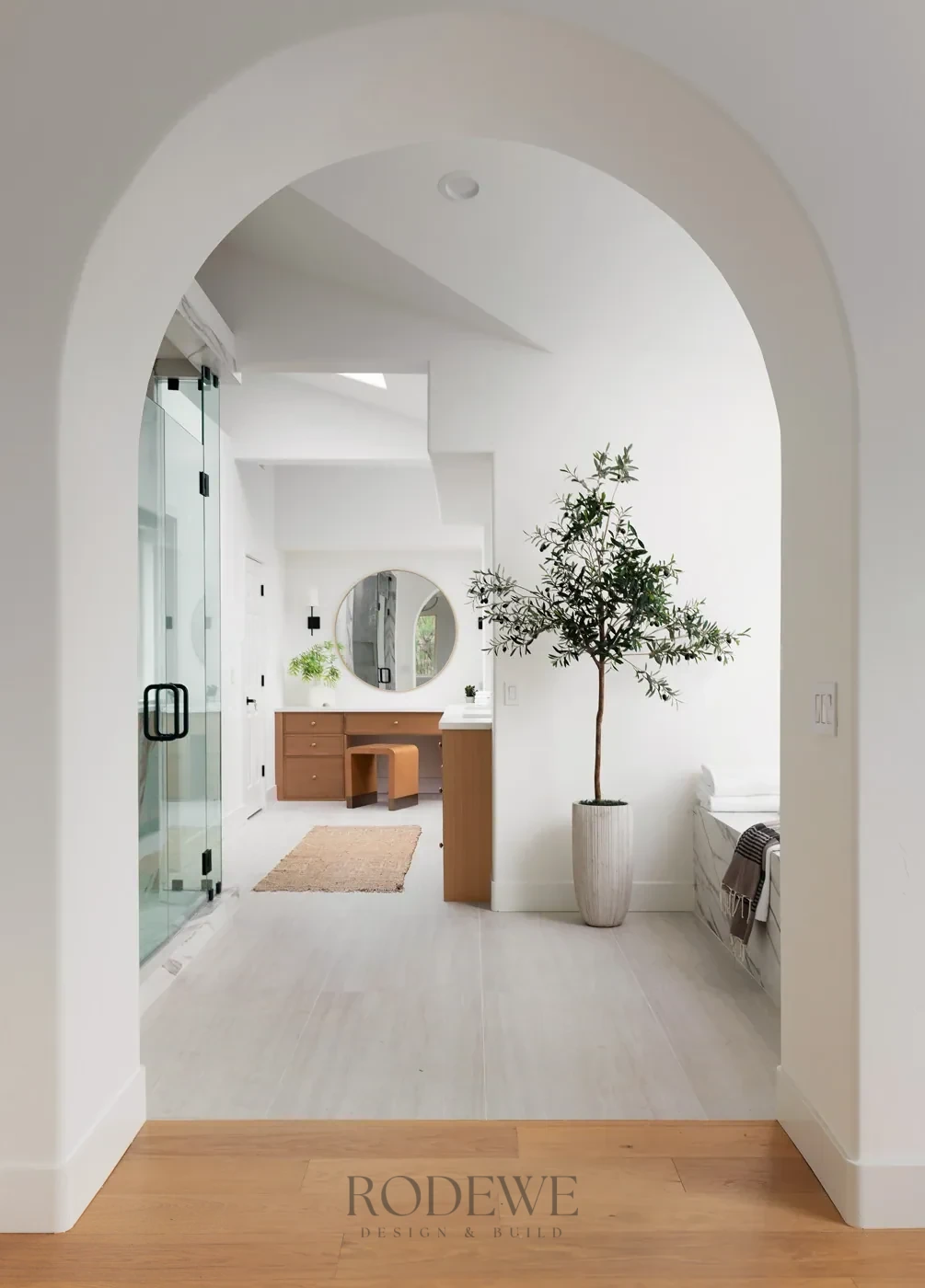
A primary suite is rarely improved simply by upgrading the bathroom.
The bedroom, bathroom, wardrobes, circulation, privacy, daylight, and sometimes exterior access work together.
A larger shower may be less valuable than reorganizing an awkward bathroom entrance.
Additional closet cabinetry may be less useful than improving the sequence between dressing and bathing.
Expensive finishes have the greatest effect when the architecture beneath them is already working.
The Living Area Should Be Tested With Real Furniture
Empty plans can make rooms appear more flexible than they actually are.
Furniture reveals whether the architecture works.
A large living room may become surprisingly constrained after accounting for the sofa, chairs, television or artwork, fireplace, exterior openings, and circulation.
Furniture planning should therefore influence electrical locations, floor outlets, lighting, windows, and sometimes walls.
This is especially useful on an investment property because it helps identify whether the renovated square footage will actually function well for future occupants.
Correct the Building Before Decorating the Investment
Some renovation expenses photograph beautifully.
Others disappear behind drywall.
The invisible ones may be more important.
Depending on the property, meaningful capital can be required for electrical capacity, plumbing, waterproofing, drainage, mechanical systems, structural work, windows, roof conditions, or exterior envelope issues.
These categories do not create the immediate visual impact of a stone slab or custom cabinet door.
But premium finishes installed over unresolved building problems do not make the underlying investment stronger.
A disciplined renovation therefore establishes what the building needs before deciding how much of the remaining capital can responsibly move toward visible customization.
Use Design to Decide Where Premium Materials Actually Matter
High end renovation should not mean making every item expensive.
It should mean knowing which elements deserve emphasis.
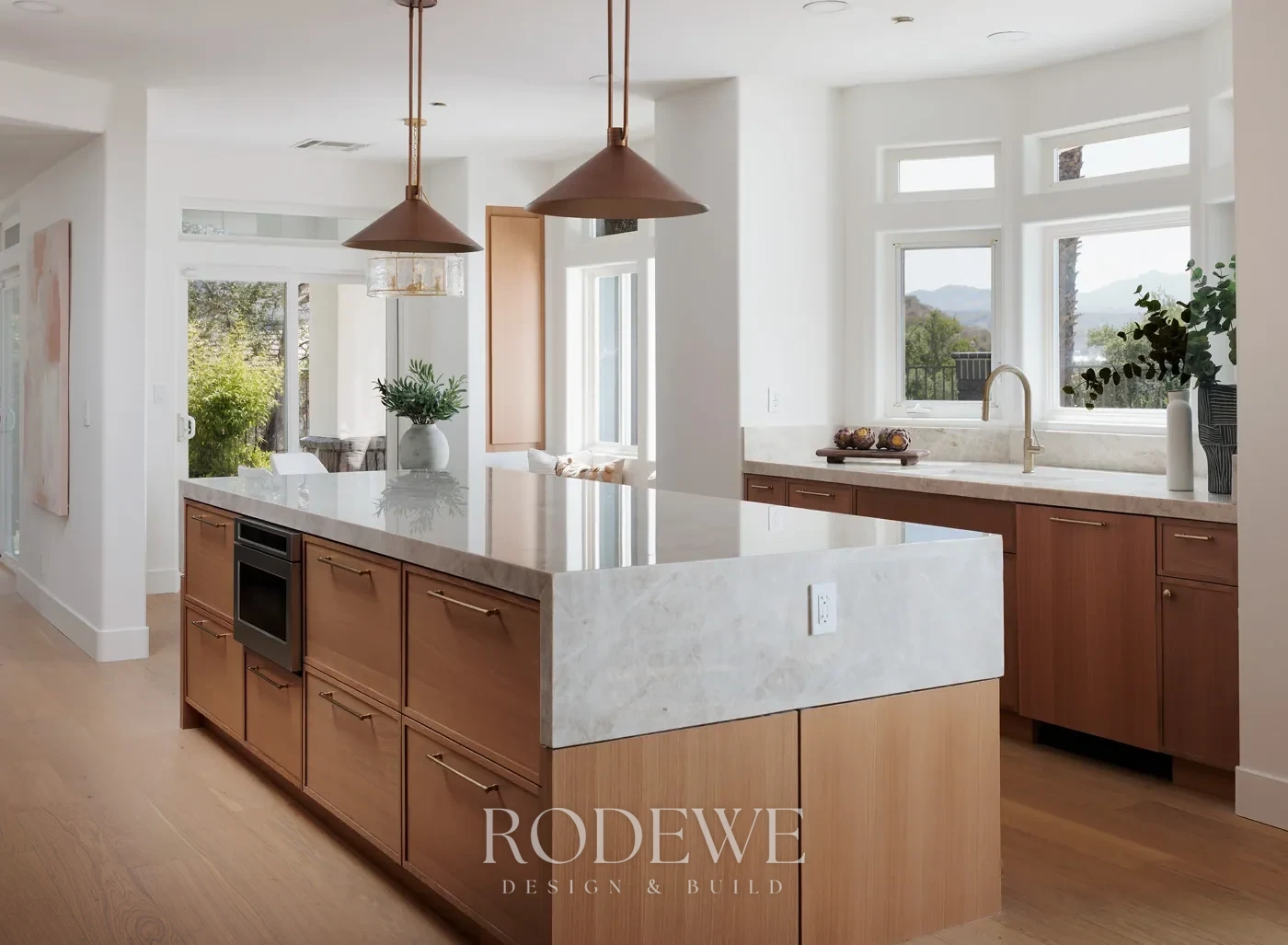
A natural stone island may justify significant investment if the kitchen is continuously visible from the main living space.
Custom cabinetry may be valuable when it solves difficult storage and architectural conditions that standard cabinetry cannot resolve elegantly.
A better window or door system may deserve priority when the relationship with an exterior terrace is central to the property.
Lighting can justify investment when it controls the atmosphere of several connected rooms.
Elsewhere, deliberate simplicity may strengthen the result.
Quiet plaster walls can allow stone to matter more.
Fewer flooring changes can make the interior feel larger.
Restrained hardware can prevent competition between materials.
Secondary spaces can be durable and refined without copying every premium detail used in primary rooms.
The goal is not uniform spending.
It is intentional hierarchy.
Design for a Market Without Designing a Generic House
Investment renovation creates a difficult balance.
Designing only around the current owner can make a property highly specific.
Designing for an imaginary average buyer can produce an interior with little identity.
The stronger middle ground is to distinguish between architectural quality and personal taste.
Good proportions are broadly useful.
Natural light is broadly useful.
Comfortable circulation is broadly useful.
Well planned storage is broadly useful.
A kitchen with appropriate clearances is broadly useful.
Layered lighting is broadly useful.
A coherent material palette is broadly useful.
Those features can feel distinctive without forcing a future occupant to share one very particular aesthetic preference.
Color, furniture, decorative objects, and easily changed layers can carry more individuality.
Permanent construction should work harder.
Material Cohesion Matters More Than Material Quantity
Investment renovations sometimes become less refined as more premium materials are added.
One bathroom introduces a dramatic stone.
Another introduces a different statement stone.
The kitchen has another cabinet species.
The stair adds another wood tone.
Each room uses different metals.
Flooring changes repeatedly.
Individually, every choice may be attractive.
Together, they can make the property feel like several unrelated projects.
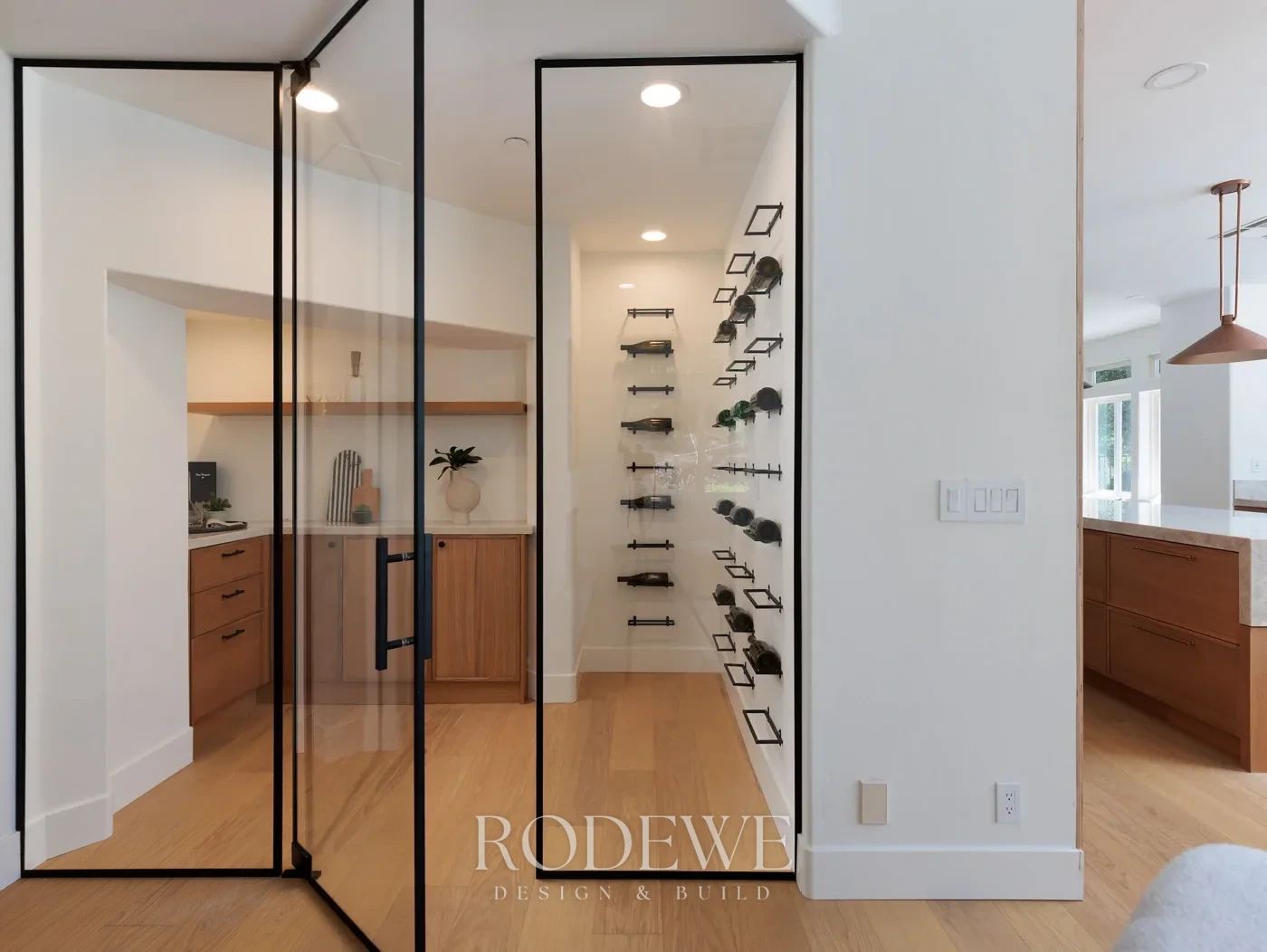
A more disciplined approach creates a material vocabulary for the whole residence.
Natural wood can repeat in different forms.
One dominant stone can establish character while supporting surfaces remain quieter.
Metal finishes can be limited and coordinated.
Flooring can continue through major connected spaces.
Cabinetry can change by room without losing proportional consistency.
This is where interior design supports the investment by making the property feel intentional rather than expensive only in pieces.
Project Management Should Control Decisions, Not Merely Report Progress
Construction management is often described through schedules, meetings, progress reports, and contractor coordination.
Those functions matter.
But an owner also needs a system for making decisions.
Construction generates decisions continuously.
Some are minor.
Others can affect several trades, the budget, and the completion date at the same time.
The value of project management is partly knowing which category a decision belongs to.
Establish a Baseline Scope Before Comparing Prices
A contractor can only price what has been defined.
If one bidder assumes custom cabinetry and another assumes semi custom cabinetry, their totals are not directly comparable.
If one includes waterproofing preparation and another excludes it, the lower number may simply represent less work.
If lighting is thoroughly specified in one proposal but carried as an allowance in another, price comparison becomes misleading.
The owner therefore needs a baseline scope.
That baseline should identify what the project includes, what it excludes, what remains undecided, and where assumptions still exist.
The clearer this document becomes, the more useful contractor pricing becomes.
Compare Contractor Bids by Assumption
The lowest total is not automatically the lowest cost.
A proposal may look attractive because significant items are excluded, carried as allowances, or based on a lower specification.
Another proposal may initially appear more expensive because it contains a more complete scope.
A meaningful bid comparison looks beyond the total and asks:
What does each contractor include?
What is excluded?
Which items are allowances?
What specification is assumed?
Are permits and inspections included?
How is supervision priced?
How are insurance and general conditions treated?
What owner supplied items are assumed?
What schedule does the price depend on?
Where are subcontractor scopes incomplete?
This turns bid selection from a price comparison into a scope comparison.
Treat Allowances as Unresolved Decisions
Allowances have legitimate uses.
Not every selection must be complete when a contract is prepared.
But every major allowance also represents uncertainty.
If cabinetry, flooring, appliances, stone, plumbing fixtures, decorative lighting, hardware, doors, and landscaping are all allowances, the apparent construction price may provide much less certainty than the total suggests.
The goal is not to eliminate every allowance.
It is to identify which allowances are large enough to affect the owner's decision about the total investment.
Those items should be developed further before construction if practical.
Every Change Order Needs a Consequence Review
When a change order is presented, price is only one part of the decision.
The owner should also understand what the change affects.
Moving a plumbing fixture may affect demolition, rough plumbing, framing, tile, cabinetry, inspection timing, and potentially waterproofing.
Changing a window may affect framing, exterior waterproofing, stucco or siding, interior trim, lead time, and painting.
Changing a stone selection may affect procurement, fabrication, cabinetry loading assumptions, and installation sequence.
A useful change review therefore asks two questions:
What does it cost?
And:
What follows from approving it?
That second question is often where project management protects the schedule as much as the budget.
The Construction Schedule Is Part of the Investment Model
For an investment property, time can have financial consequences.
Depending on ownership structure and project purpose, extended duration can affect financing, insurance, taxes, utilities, temporary accommodations, leasing plans, resale timing, and other carrying costs.
That does not mean the correct strategy is simply to demand the shortest possible schedule.
An unrealistic schedule creates different problems.
The objective is a credible sequence tied to actual decisions and procurement.
Doors should be ordered early enough to arrive when needed.
Cabinet fabrication should occur after reliable dimensions are available.
Stone templating should follow completion of the supporting work.
Plumbing fixtures should be available when rough and finish requirements depend on them.
Finish trades should enter the project in an order that protects completed work.
A construction schedule becomes much more useful when it reflects decision deadlines as well as trade activities.
Use Decision Deadlines Instead of Constant Urgency
One of the most exhausting construction environments is a project where everything suddenly feels urgent.
That usually means important decisions were not connected to the construction schedule early enough.
A better process identifies when decisions actually become necessary.
The appliance package may need to be finalized before cabinetry.
Cabinetry may need to be finalized well before installation because fabrication requires time.
Plumbing valves may need decisions long before visible plumbing fixtures are installed.
Exterior doors may need to be ordered months before the opening is ready.
Natural stone may need selection early enough to coordinate quantities and fabrication.
Not every item needs an immediate answer.
It needs an answer before the decision becomes critical.
Quality Control Should Happen Before the Final Walkthrough
The final walkthrough matters.
It is simply too late to be the first serious quality review.
Some of the most important checkpoints occur while work is still exposed.
Lighting locations are easiest to correct before ceilings are complete.
Plumbing rough locations are easier to change before waterproofing and tile.
Cabinet dimensions should be verified before fabrication or installation.
Stone slab layout should be considered before fabrication.
Tile transitions should be resolved before several walls have already been installed.
Exterior material junctions should be reviewed before finish work hides the underlying condition.
Project management includes understanding when a detail is still inexpensive to correct.
Documentation Is Part of Cost Control
A substantial project generates an enormous amount of communication.
Phone calls.
Site discussions.
Emails.
Texts.
Drawings.
Proposals.
Submittals.
Invoices.
Change orders.
Selections.
Substitutions.
Inspection comments.
Without a reliable record, the project gradually becomes dependent on memory.
Important decisions should be documented clearly enough that the owner and project team can later understand what was approved.
This is particularly important for scope changes, substitutions, pricing decisions, schedule impacts, finish approvals, and unresolved field conditions.
Documentation should reduce ambiguity, not create unnecessary bureaucracy.
When RODEWE Leads the Renovation
For an investment property undergoing a meaningful renovation, RODEWE can work across design and construction rather than limiting involvement to one isolated part of the project.
The work may begin by evaluating the existing property and defining the renovation thesis.
From there, space planning can establish which architectural changes have the greatest leverage.
Kitchen, bathroom, cabinetry, flooring, lighting, natural stone, windows, doors, architectural details, and furniture relationships can then be developed within one design language.
Before construction, those decisions can be translated into clearer scopes, pricing, procurement requirements, and schedules.
During construction, management shifts toward coordination, design intent, changes, documentation, field decisions, and quality.
The purpose of integrating these disciplines is not to create more process.
It is to prevent the investment strategy from becoming disconnected from the building process.
When RODEWE Serves as the Owner’s Representative for New Construction
A new residential construction project may already have a general contractor, architect, engineers, interior designer, vendors, and specialty consultants.
What it may not have is a professional whose primary perspective is the owner's.
That is where an owner's representative can be useful.
Because RODEWE's work spans design, construction, budgeting, material decisions, and project coordination, RODEWE can be engaged to represent the owner during a new construction project.
The owner's representative does not need to duplicate the general contractor or architect.
Instead, the role can help the owner interpret and coordinate information coming from the project team.
Depending on the agreed scope, this can include reviewing budgets, contractor proposals, schedules, change orders, design decisions, finish selections, procurement issues, project documentation, progress, and questions that require owner approval.
The responsibilities should be defined clearly at the beginning so the architect, contractor, consultants, RODEWE, and owner understand who is responsible for what.
That clarity is itself part of good project management.
When RODEWE Works as a Consultant Instead
Not every project needs continuous owner representation.
Some owners are experienced and want to remain directly involved.
Others already have a strong project manager.
Some simply need an independent construction and design perspective before making a major decision.
In those situations, RODEWE can work in a consulting capacity.
An investor may want renovation input before purchasing a property.
An owner may want a contractor budget reviewed before signing a contract.
A developer may want a second perspective on value engineering.
A homeowner may need help deciding whether a proposed change order is reasonable in scope.
Another owner may want design and material selections reviewed before fabrication begins.
Consulting can provide targeted involvement without creating a full project management engagement.
Owner’s Representative Versus Consultant: Think About Continuity
The distinction is less about the title and more about how continuously RODEWE participates.
Owner representation makes more sense when the owner wants ongoing involvement across a significant portion of the design or construction process.
Consulting is more appropriate when the need is concentrated around particular decisions.
An owner who lives elsewhere while building a new Dana Point residence may prefer continuous representation.
An experienced investor managing contractors personally may only need periodic budget, design, procurement, or change order review.
The service should fit the project rather than forcing the project into a predefined service model.
Five Documents Can Make an Investment Renovation Far Easier to Control
A project does not need hundreds of pages of management paperwork to become more disciplined.
It needs a few important documents that remain current.
The Property Thesis
This explains what the project is trying to achieve.
It should identify intended use, design direction, major priorities, the level of finish, and the decisions that matter most.
When an upgrade appears during construction, the owner can ask whether it supports this thesis.
The Scope Matrix
The scope matrix clarifies what is included and who is responsible.
It helps expose gaps between architect, contractor, designer, vendors, and owner supplied items before those gaps become field problems.
The Allowance and Selection Register
This identifies which cost categories are still estimates rather than fixed selections.
It also tracks when decisions need to be completed.
The Change Decision Log
Important scope changes should include the decision, cost, schedule effect where known, and approval.
This keeps a renovation from gradually changing without a clear view of the accumulated impact.
The Procurement Map
Long lead items deserve their own planning.
Doors, windows, cabinetry, specialty lighting, stone, appliances, custom metalwork, plumbing fixtures, and other materials should be connected to the construction sequence rather than ordered whenever someone happens to remember them.
These documents create a common language between investment strategy and project execution.
Value Engineering Should Preserve the Reason the Design Works
Traditional value engineering can become a demolition of the design itself.
The budget is high, so individual premium items are removed until the number improves.
The custom cabinetry disappears.
The large opening becomes smaller.
The stone changes.
Lighting is reduced.
Doors are downgraded.
One decision at a time, the project may become less expensive but also lose the characteristics that justified the renovation.
A stronger value engineering process identifies the design hierarchy first.
If the entire kitchen depends on one important natural stone element, perhaps that feature should remain.
If the relationship between the living room and exterior is the central architectural move, protecting the opening may matter more than premium finishes elsewhere.
If custom cabinetry is solving a difficult spatial condition, reducing decorative complexity might be smarter than replacing the cabinetry system entirely.
The objective is not simply lower cost.
It is better allocation of the available cost.
Know When to Stop Improving
Investment renovation also requires the discipline to stop.
Once construction is underway, it becomes very easy to reason that an additional improvement makes sense because the property is already under renovation.
Sometimes that is correct.
Sometimes the project begins absorbing improvements that do not meaningfully change the result.
A useful test is to ask:
Would this decision have been included if we were creating the scope again from the beginning?
If the answer is no, the upgrade deserves additional scrutiny.
Another useful question is whether the proposed improvement changes architecture, function, durability, or the overall perception of the property.
If it does none of those things, it may simply be scope growth.
Questions to Resolve Before Detailed Pricing
Before an investment renovation is priced as though the number is reliable, the owner should understand the intended use of the property, the principal architectural changes, the target finish level, the condition of major building systems, likely permitting requirements, important custom elements, major owner supplied items, and the decisions that remain allowances.
The owner should also know who will review contractor pricing, who is authorized to approve scope changes, who maintains the current project documents, and who will represent the owner's interests when the owner is not available.
The goal is not to eliminate uncertainty.
No substantial renovation can do that completely.
The goal is to know where the uncertainty still exists.
The Investment Needs Someone Watching the Whole Picture
A renovation can have an excellent architect.
An excellent contractor.
Excellent cabinetry.
Excellent stone.
Excellent lighting.
And still lose direction if each decision is considered separately.
The owner needs someone watching the relationship between all of them.
What was the original objective?
What changed?
Why did it change?
What does the change cost?
What does it affect next?
Does this upgrade still make sense?
Is the project becoming more valuable, or simply more expensive?
For owners considering Real Estate Investment Renovation & Project Management in Dana Point, RODEWE can help connect the property strategy to the design and construction decisions that follow.
RODEWE can lead a coordinated renovation, represent you from the owner side during a new construction project, or participate as a consultant when you need an additional perspective at specific moments.
The role can change with the project.
The priority should not:
keep the investment thesis visible while the building becomes more complicated.
Frequently asked questions
What is real estate investment renovation?
Real estate investment renovation treats remodeling as both a property strategy and a construction project.
The objective is to determine which architectural, functional, material, and building improvements best support the intended use of the property rather than simply upgrading every available area.
What does an owner’s representative do on a residential construction project?
An owner's representative works from the owner's perspective.
Depending on the engagement, the role can involve reviewing budgets, schedules, proposals, change orders, project documentation, design coordination, procurement questions, progress, and decisions that require owner approval.
The owner's representative does not automatically replace the architect, general contractor, engineer, or other consultants. Responsibilities should be established clearly in the project agreement.
Can RODEWE represent me if I already hired a general contractor?
Yes.
Owner representation can be particularly useful when an owner already has a construction team but wants additional review and coordination from the owner's side.
The RODEWE scope should be coordinated with the contractor and other consultants so responsibilities remain clear.
Can RODEWE be my representative for a new construction project?
Yes.
RODEWE can serve as an owner's representative on new residential construction, with responsibilities tailored to the project, the existing professional team, and how actively the owner wants to participate.
Can I hire RODEWE only as a consultant?
Yes.
An owner can engage RODEWE for focused consulting rather than continuous project representation.
That may include renovation strategy, budget review, contractor bid comparison, design review, value engineering, finish decisions, project troubleshooting, change order evaluation, or another defined issue.
Can RODEWE review a property before I buy it?
RODEWE can provide renovation and construction perspective to help a prospective owner better understand potential scope, design opportunities, and project considerations.
That should complement appropriate inspections, engineering, financial, legal, real estate, and other professional due diligence rather than replace them.
How can project management reduce unnecessary renovation costs?
Project management cannot guarantee a fixed final cost or eliminate unforeseen conditions.
It can improve cost control by clarifying scope, identifying allowances, comparing bids consistently, establishing decision deadlines, coordinating procurement, documenting changes, and resolving significant design decisions before they become expensive field revisions.
Does every Dana Point renovation require a Coastal Development Permit?
No.
The requirement depends on the property and scope. Dana Point states that development within the Coastal Zone requires a Coastal Development Permit unless an exemption applies. Property specific requirements should therefore be verified with the City's Planning Division before relying on a general assumption.
Do interior renovations require permits in Dana Point?
Permit requirements depend on the work being performed. Construction involving structural, plumbing, electrical, mechanical, addition, alteration, and other regulated work can require permits and inspections. The appropriate permit path should be confirmed for the proposed scope.
Should an investment renovation always use luxury materials?
No.
Material quality should support the property, design concept, intended market, expected use, and overall investment strategy.
Premium materials are most effective when placed where they materially influence architecture, durability, function, or the perception of the home.
Is an owner’s representative the same as a construction manager?
The terms can overlap, and responsibilities vary between projects.
The more important issue is the contractual scope.
An owner's representative is specifically engaged to act from the owner's perspective, while construction management can describe a wider range of responsibilities involving schedule, cost, coordination, and execution.
The agreement should define the actual duties rather than relying on the title.
More in Dana Point
ADU Construction in Dana Point · Bathroom Remodeling in Dana Point · General Contractor in Dana Point · High End General Contractor in Dana Point · High End Remodeling Contractor in Dana Point · Home Additions in Dana Point · Interior Design in Dana Point · Kitchen Remodeling in Dana Point · Whole Home Remodeling in Dana Point
Real Estate Investment Renovation in nearby cities
Real Estate Investment Renovation in Costa Mesa · Real Estate Investment Renovation in Coto de Caza · Real Estate Investment Renovation in Irvine · Real Estate Investment Renovation in Laguna Beach · Real Estate Investment Renovation in Laguna Hills · Real Estate Investment Renovation in Laguna Niguel · Real Estate Investment Renovation in Newport Beach · Real Estate Investment Renovation in San Clemente
Countywide guides
Home Additions in Orange County · ADU Construction in Orange County · General Contractor in Orange County · Bathroom Remodeling in Orange County · Interior Design in Orange County · Kitchen Remodeling in Orange County · Whole Home Remodeling in Orange County · Construction Project Management in Orange County
Featured projects
Lusitano: Coto de Caza · Espalter: Mission Viejo · Sapphire: Balboa Island, Newport Beach
Guides
Design-build vs architect + general contractor · ADU vs JADU in Orange County · All articles
Explore
Our projects · Portfolio · How we work · All local guides · Construction management · Real estate investment · Request a consultation
Planning a project in Dana Point?
Tell us about your home and goals. We will respond within one business day with next steps.
Request a free consultation
Tell us about your project. We reply within one business day.
- Phone: (949) 883-8438